










As motor control enters the "vector era," how can the efficiency bottlenecks and precision limitations of traditional drives be overcome? FOC (Field-Oriented Control) technology decouples and reconstructs magnetic field logic mathematically, achieving independent control of torque and magnetic flux through "vertical tracking," giving AC motors the intuitive control of DC motors! This article deeply dissects FOC technology, from hardware closed-loop to algorithmic core—watch the video to learn more

FOC Hardware Core: The "Computational Brain" of Closed-Loop Control
1. System architecture
The controller receives signals from current sensors (real-time monitoring of coil current) and angle sensors (positioning of rotor position);
Calculate the required magnetic field direction and intensity through FOC algorithm based on target instructions (speed/position/torque);
Output PWM signal to control 6 MOS switches, driving the motor to rotate accurately.
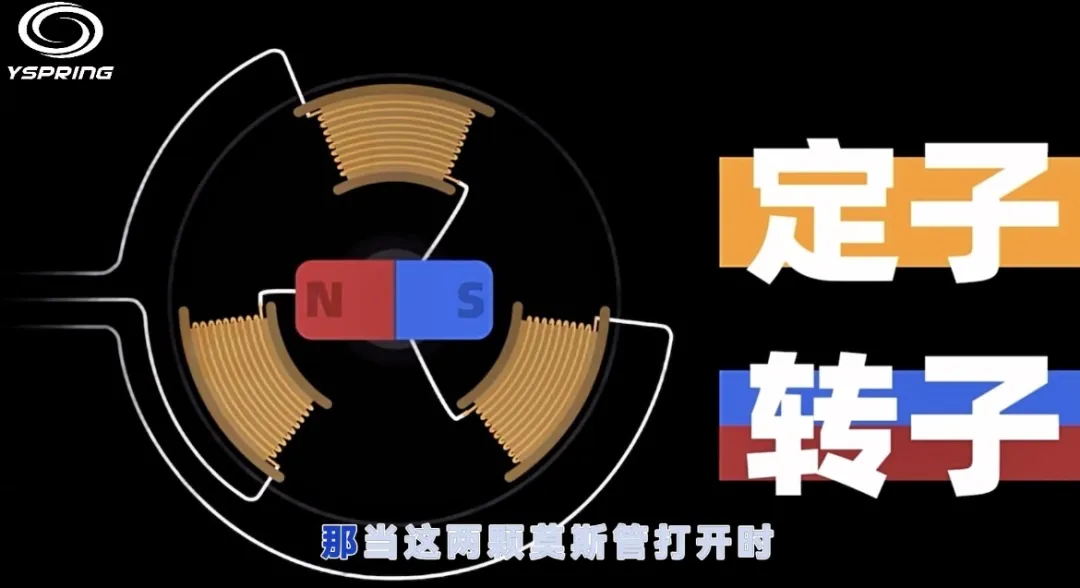
2. Brushless motor structure and driving logic
Stator: 3 sets of coils, switching current direction through MOS tubes;
Rotor: permanent magnet, pulled and rotated by the stator magnetic field;
Traditional driving defects: Only 2 sets of coils work at any time, resulting in low efficiency and low torque;
FOC optimization: Three groups of coils work together to synthesize a stronger magnetic field, improving efficiency and torque.
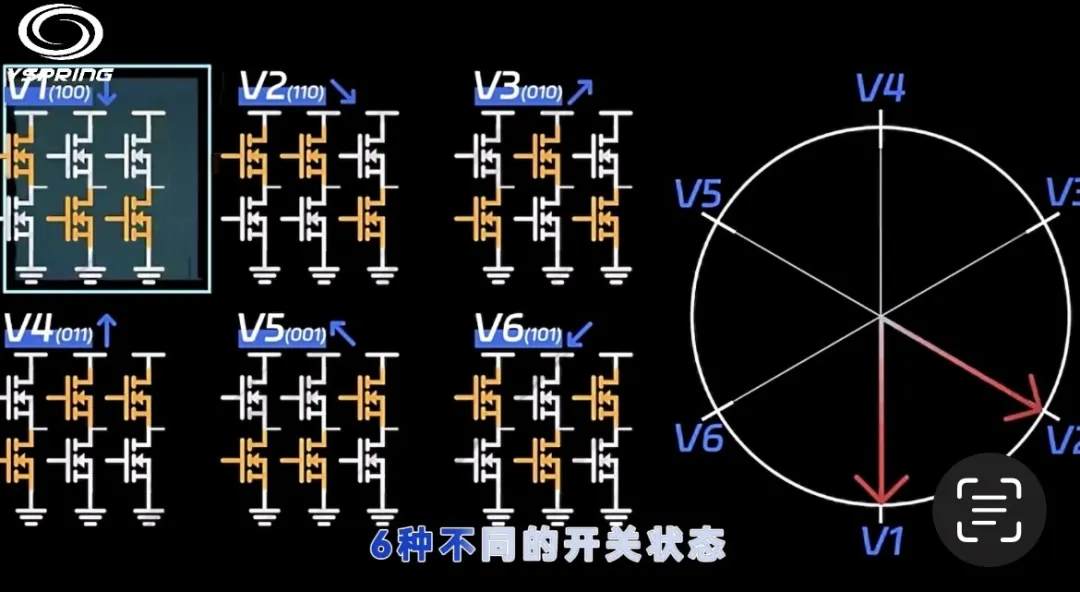
Magnetic field synthesis technique: 6 states to create a 360 ° controllable magnetic field
1. Direction of basic magnetic field
Synthesize 6 basic magnetic field directions (one every 60 °) through 6 combinations of MOS switches;
Quickly switch the direction of the magnetic field (e.g. 0.5ms/time) to keep the rotor rotating continuously.
2. Magnetic field strength control
7th state: All MOS transistors are turned off and the magnetic field is 0;
Insert the proportion of "zero magnetic field" time, adjust the magnetic field strength, and achieve precise control.
FOC algorithm core: "dynamic tracking technique" of vertical magnetic field
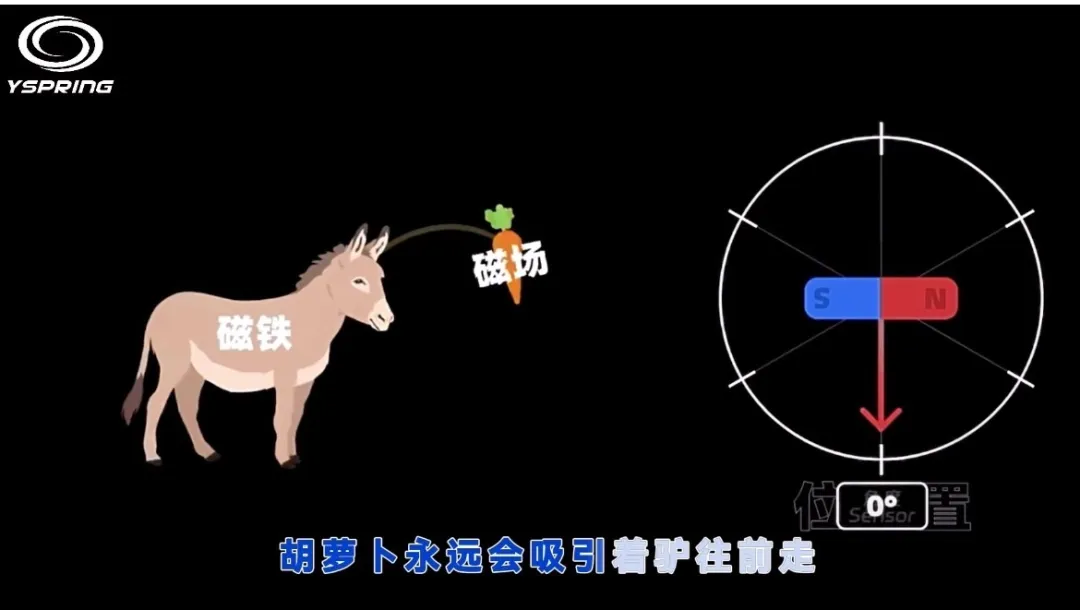
1. Principle of magnetic field direction control
The sensor detects the position of the rotor and generates a stator magnetic field that is always perpendicular to the rotor magnetic field;
Similar to the "donkey and carrot" effect: the magnetic field always leads the rotor by 90 °, maximizing traction efficiency.
2. Closed loop control with a three ring structure
Current loop: Real time monitoring of coil current (replacing magnetic field, as current is strongly correlated with magnetic field direction/intensity);
Speed loop: Adjust the current through PID to control the speed;
Position ring: Accurately locate the rotor to achieve stable operation at rest or low speed.
Practical witness: YSPRINGFOC driver board controls the "silky performance" of the circulating fan
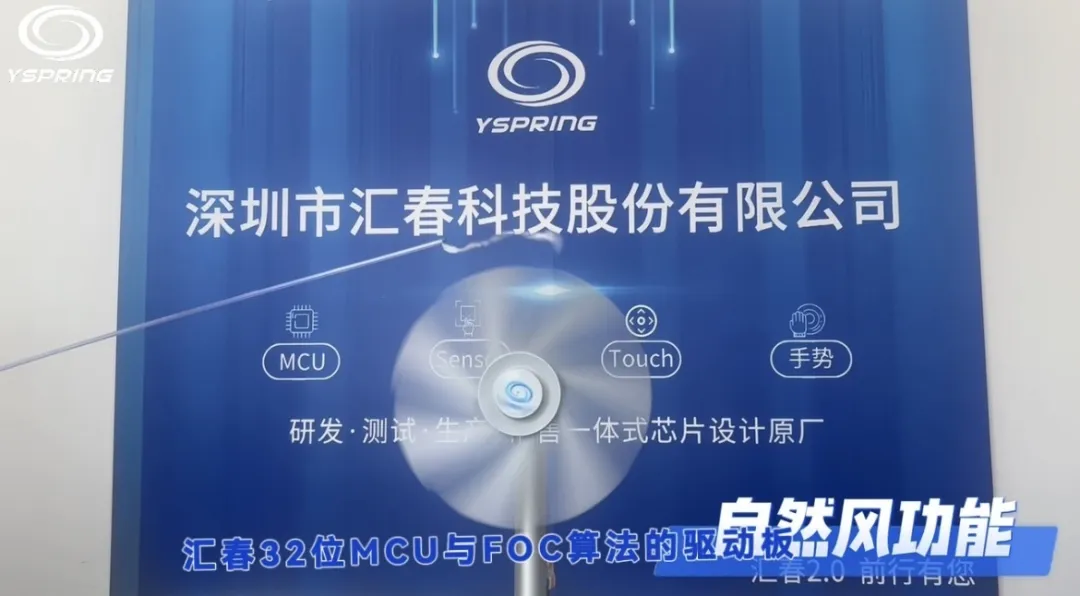
We witnessed through practical demonstrations how a driver board integrated with ys32-bit MCU and advanced FOC algorithm accurately controls the operation of a circulating fan. It is not difficult to see from the demonstration that our MCU, combined with its exclusive FOC algorithm, has demonstrated excellent stability, high efficiency, and extremely low operational disturbance in fan applications, which is a significant advantage of our "chip+algorithm" software hardware fusion technology strategy.
We will continue to delve into the field of motor control, continuously optimize underlying algorithms, and strive to provide more advanced and reliable solutions for the industry, working together with industry partners to create a new chapter in motor applications. Your continuous support and attention are the driving force behind our continuous progress.


0755-86227153


